The Balochistan Conundrum: India's Unwavering Stance on Pakistan's Troubled Province
The Balochistan Conundrum: India's Unwavering Stance on Pakistan's Troubled Province
The Balochistan conundrum is a complex and sensitive issue that has been a point of contention between India and Pakistan for decades. The situation in the restive province of Balochistan has been marred by allegations of human rights abuses, militarization, and a lack of economic development. India has consistently taken a strong stance on the issue, with Prime Minister Narendra Modi calling for the protection of the Baloch people's rights and their right to self-determination. As tensions between India and Pakistan continue to escalate, the situation in Balochistan remains a major point of contention between the two nations.
At the heart of the issue is the question of self-determination, with the Baloch people seeking greater autonomy and even independence from Pakistan. The province has a long history of militancy, with various separatist groups seeking to establish an independent Balochistan. Pakistan, on the other hand, has maintained a tight grip on the province, with the military playing a significant role in suppressing dissent and maintaining control. India has taken a strong stance on the issue, with Prime Minister Modi stating that the Baloch people have the right to self-determination and that India will continue to support their struggle for freedom.
A Brief History of Balochistan
The history of Balochistan is complex and multifaceted, with the province being a key player in the Great Game of the 19th century. The region was a major hub of trade and commerce, with the British East India Company seeking to control the region's rich natural resources. In 1839, the British East India Company invaded Afghanistan, leading to a series of conflicts with the Durrani Empire, which controlled the region. The British eventually established the Balochistan Agency in 1871, which was administered by the British Raj. After India's independence in 1947, Balochistan was merged with Pakistan, leading to a long-standing dispute between the two nations over the province's autonomy.
The Current Situation in Balochistan
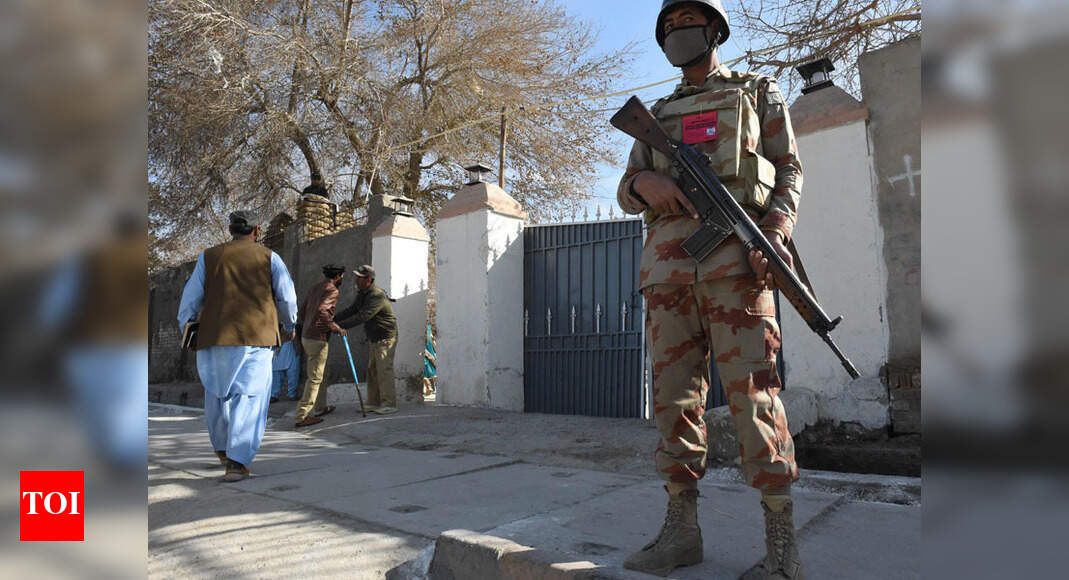
Today, the situation in Balochistan remains precarious, with the province experiencing a significant amount of militancy and unrest. The province is home to a number of separatist groups, including the Balochistan Liberation Army (BLA) and the Baloch Republican Army (BRA). These groups have been involved in a number of high-profile attacks on Pakistani military and civilian targets, leading to a significant amount of bloodshed and destruction. Pakistan has responded to the militancy with force, with the military launching a number of operations against separatist groups. Human rights organizations have criticized Pakistan for its heavy-handed tactics, with many alleging that the military is responsible for widespread human rights abuses in the province.
India has been a vocal critic of Pakistan's actions in Balochistan, with Prime Minister Modi stating that the Pakistani military is responsible for the suffering of the Baloch people. In a speech to the nation in 2016, Modi stated that the Baloch people have the right to self-determination and that India will continue to support their struggle for freedom. "We stand with the people of Balochistan," Modi said. "We will continue to support their struggle for freedom and their right to self-determination."
India's Balochistan Policy
India's policy towards Balochistan has been one of strong support for the Baloch people's right to self-determination. The Indian government has provided support to separatist groups in the province, including the BLA and the BRA. In 2015, the Indian government established a diplomatic mission in Geneva, Switzerland, with the express purpose of supporting the Baloch people's struggle for freedom. The mission has been used to coordinate India's efforts to support the Baloch people, including providing humanitarian aid and diplomatic support.
India has also taken a strong stance on the issue of human rights in Balochistan. In 2018, the Indian government criticized Pakistan for its human rights abuses in the province, with the Ministry of External Affairs stating that the Pakistani military was responsible for widespread human rights abuses. "The situation in Balochistan is a matter of concern for us," the Ministry of External Affairs stated. "We condemn the human rights abuses committed by the Pakistani military and call for an immediate end to these abuses."
Pakistan's Response
Pakistan has responded to India's support for the Baloch people with anger and vitriol. The Pakistani government has accused India of meddling in Pakistan's internal affairs and of supporting separatist groups in the province. In 2018, the Pakistani government expelled the Indian High Commissioner in Islamabad, citing his support for the Baloch people. "India's interference in our internal affairs will not be tolerated," the Pakistani government stated.
The Pakistani military has also responded to India's support for the Baloch people with force. In 2018, the Pakistani military launched a number of operations against separatist groups in the province, including the BLA and the BRA. The operations have resulted in a significant amount of bloodshed and destruction, with many civilians caught in the crossfire.
International Response
The international community has been critical of Pakistan's actions in Balochistan, with many countries calling for an end to human rights abuses and the promotion of democracy and human rights in the province. In 2018, the United States Congress passed a resolution condemning Pakistan's human rights abuses in Balochistan and calling for an end to the Pakistani military's support for militant groups in the province.
The European Union has also been critical of Pakistan's actions in Balochistan, with the EU's High Representative for Foreign Affairs and Security Policy stating that the Pakistani military is responsible for widespread human rights abuses in the province. "We are concerned about the situation in Balochistan and call for an immediate end to human rights abuses," the EU's High Representative stated.
Conclusion
The Balochistan conundrum is a complex and sensitive issue that has been a point of contention between India and Pakistan for decades. India has taken a strong stance on the issue, with Prime Minister Modi calling for the protection of the Baloch people's rights and their right to self-determination. The situation in the province remains precarious, with the Pakistani military continuing to suppress dissent and maintain control. The international community has been critical of Pakistan's actions in Balochistan, with many countries calling for an end to human rights abuses and the promotion of democracy and human rights in the province. As tensions between India and Pakistan continue to escalate, the situation in Balochistan remains a major point of contention between the two nations.


Related Post

India's Balochistan Dilemma: A Test of Diplomacy and Regional Politics
Unveiling the Truth: Miss Canada Paternity Test Results

Family Nudism In Purest Form

The Tragic Fate Of The Bee Gees: How Did They Meet Their Untimely End?